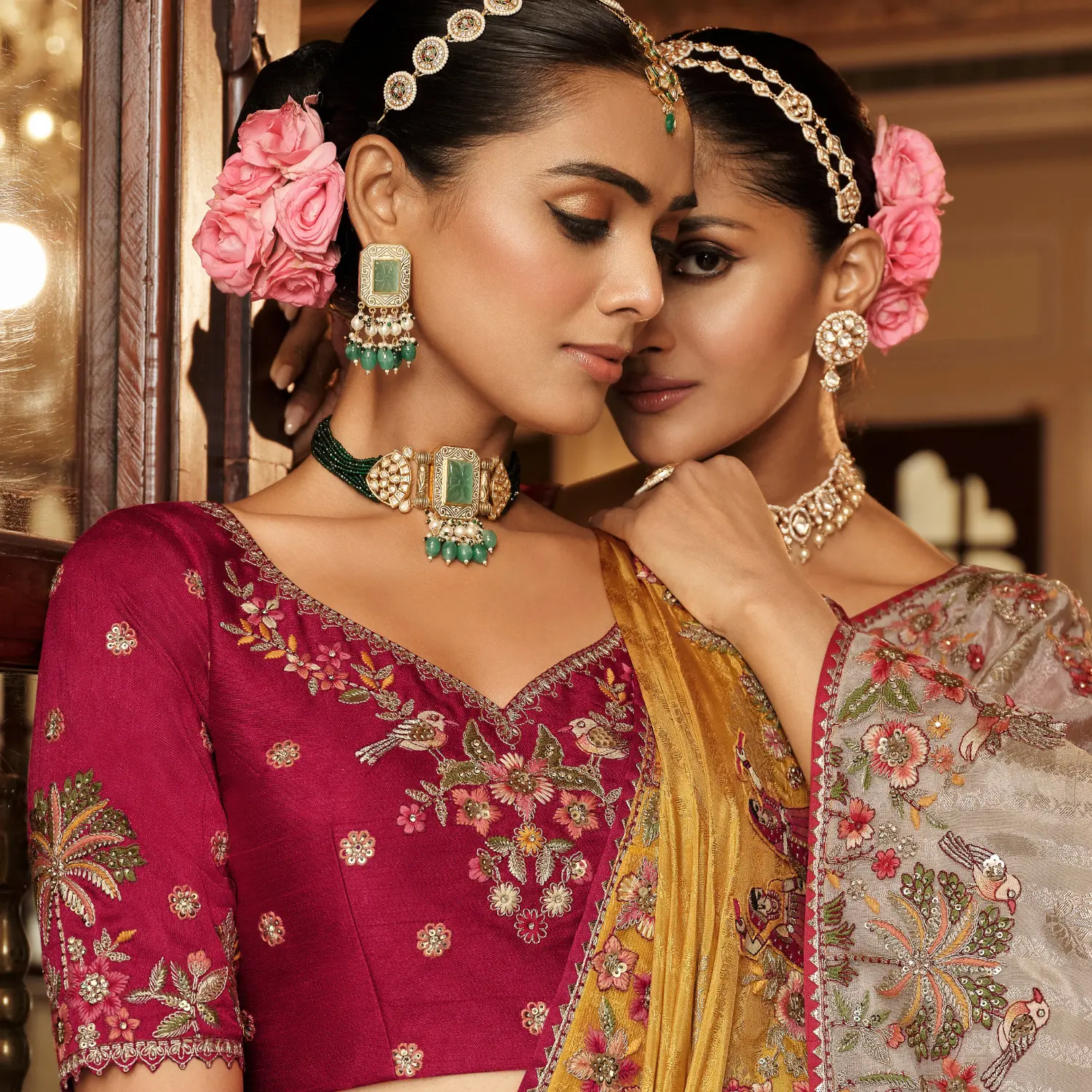
INTRODUCTION
Bridal fashion has always celebrated richness and detail, but contemporary
bridal wear is embracing a new dimension of design: layering. Jackets, capes,
and overlays are no longer considered add-ons; they are becoming central style
elements that redefine the bridal silhouette. Layering introduces depth,
versatility, and visual intrigue while allowing brides to experiment with
modern aesthetics without abandoning tradition. This trend reflects a growing
desire among brides to personalise their wedding look through thoughtful
styling rather than relying solely on heavy embellishment.
The Evolution of Layering in Bridal Wear
Layering has its roots in traditional Indian attire, where dupattas, odhnis,
and shawls were integral to bridal dressing. Today, this heritage concept is
being reimagined through structured jackets, sheer capes, peplum overlays, and
longline coats. Designers are blending traditional craftsmanship with
contemporary tailoring to create layers that feel intentional rather than
ornamental.
This evolution allows brides to enjoy the
elegance of multi-dimensional styling while maintaining a clean, modern
appearance. Layering transforms a single outfit into a statement ensemble by
adding complexity and movement.
Jackets as Architectural Elements
Bridal jackets have emerged as powerful design components. Whether cropped,
waist-length, or floor-length, jackets add structure and definition to lehengas
and anarkalis. Heavily embroidered jackets can replace traditional dupattas,
creating a bold focal point. Lighter jackets with minimal detailing offer a
refined alternative for brides who prefer subtlety.
Jackets also allow experimentation with
contrasts. A heavily embellished lehenga paired with a simpler jacket creates
balance, while a statement jacket over a minimal skirt shifts attention upward.
This flexibility makes jackets an attractive option for brides seeking a
personalised look.
Capes and Sheer Overlays for Soft Drama
Capes introduce movement and romance into bridal styling. Flowing from the
shoulders or neckline, capes frame the bride while adding softness to the
overall look. Sheer fabrics such as tulle, organza, and net allow embroidery to
float visually, creating an ethereal effect.
Unlike traditional dupattas, capes stay in
place without constant adjustment, offering both elegance and practicality.
Brides who desire drama without heaviness often gravitate toward capes as a
modern alternative.
Layering as a Tool for Versatility
One of the biggest advantages of layering is versatility. Brides can add or
remove layers across different functions, transforming the same base outfit
into multiple looks. A lehenga worn with a jacket for the ceremony can be
styled with a cape or without any overlay for the reception.
This adaptability appeals to brides who want
efficient wardrobe planning without compromising on variety. Layering allows a
single outfit to evolve throughout the wedding celebrations.
CONCLUSION
Layering has become an art form in modern bridal fashion. Jackets, capes, and
overlays add depth, individuality, and versatility to bridal ensembles. By
embracing layered styling, brides can create looks that feel both timeless and
contemporary, making a strong personal statement while honouring tradition.